


On this page
- Best Electric Scooters for College Students
- Are Electric Scooters Good For College Students
- Tips For Choosing The Right Commuter Scooter For College
- Potential Risks And Safety Measures
- How Can I Prevent My Electric Scooter From Being Stolen?
- Commuter Scooters Recommended For College Students
- Can I Store and Charge an Electric Scooter in My Dorm Room?
- How Much Real-World Range Do I Actually Need for a College Campus?
- Can the Scooter Handle Steep Hills?
- How Long Does the Battery Take to Fully Charge?
- How Do I Prevent My Electric Scooter from Being Stolen on Campus?
- Is Buying an Electric Scooter Cheaper Than Getting a University Parking Permit?
- What Safety Features Are Essential for Riding an Electric Scooter Around a Crowded Campus?
- Can the Electric Scooter Be Ridden in the Rain or Snow on Campus?
Best Electric Scooters for College Students
The updated recommendations for college students now feature the Varla Eagle One PRO in the top spot for students who prioritize premium, all-terrain performance and maximum range, followed by balanced commuters and budget options.
1. Varla Eagle One PRO All Terrain Electric Scooter
-
Eagle One PRO All Terrain Electric Scooter
Price: $1,699.00 (Original: $2,599.00) - Rating: 4.8/5 (82 reviews)

The ultimate "heavy-duty beast" for campus transit, perfect for large universities with rough asphalt, grassy shortcuts, or steep inclines.
- Key Advantage: Incredible dual 1000W hub motors (3600W peak power) that demolish hills up to a 35-degree climbing angle without breaking a sweat.
- Performance: Unmatched 45+ mph top speed and a massive 45 to 60-mile range from its robust 60V 27Ah battery, ensuring you only need to charge it once a week.
- Security & Safety: Locked digitally via an intelligent NFC card key to prevent unauthorized riding, paired with massive 11-inch tubeless tires and dual hydraulic brakes for rapid stopping.
- Note: At 90 lbs, it is exceptionally heavy. It is not meant to be carried up dorm stairs; choose this only if you have ground-floor storage or an elevator.
For students looking for a black friday electric scooter deal, the Varla Eagle One PRO is worth considering. Its powerful dual-motor system, long-range battery, and all-terrain capabilities make it an excellent choice for navigating large campuses and steep hills. With Black Friday approaching, students can watch for potential discounts to make this premium electric scooter more affordable.
2. Segway Ninebot Max G2
- Price: $699.99 (Original: $1,400.00)
- Rating: 4.42/5 (1,264 reviews)
The gold standard for standard daily campus commuting, known for its sheer reliability.
- Key Advantage: Features built-in Apple Find My integration to track your scooter's location anywhere on campus.
- Specs: Reaches 22 mph with a real-world range of 27 to 43 miles.
- Note: Weighs 53 lbs, making it much more manageable than the Varla, but still hefty for long stairwells.
3. Hiboy S2R Plus
- Price: $399.99 (Original: $806.00)
- Rating: 4.75/5 (145 reviews)
A highly practical option for students living in tight dorm rooms or upper-floor apartments.
- Key Advantage: A detachable battery design allows you to leave the dirty scooter locked outside at the bike rack while you carry just the light battery inside to charge at your desk.
- Specs: Hits a top speed of 19 mph with a max range of 22 miles. It weighs a portable 31.5 lbs.
4. iScooter 500W Folding Commuter
- Price: $229.99
Features flat-proof 10-inch honeycomb solid tires and a strong 500W motor to handle modest campus hills at a rock-bottom price.
5. Gotrax GXL V2
- Price: $329.95
An ultra-lightweight 26 lbs frame that is easy to carry up tight dorm stairwells, offering a simple 15.5 mph top speed and a 12-mile range for quick building-to-building trips.
Electric Scooter Comparison Table
| Model | Top Speed | Range | Weight | Tire Type | Key Feature |
|---|---|---|---|---|---|
|
Varla Eagle One PRO |
45+ mph |
45–60 miles |
90 lbs |
11" Air tubeless |
Dual 1000W motors & NFC Lock |
|
Segway Ninebot Max G2 |
22 mph |
Up to 43 miles |
53 lbs |
10" Self-sealing pneumatic |
Apple Find My tracking |
|
Hiboy S2R Plus |
19 mph |
Up to 22 miles |
31.5 lbs |
9" Pneumatic |
Removable battery |
|
Gotrax GXL V2 |
15.5 mph |
Up to 12 miles |
26 lbs |
8.5" Pneumatic |
Ultra-lightweight & cheap |
Navigating the campus and neighborhood as a college student can be difficult. Although they are common forms of transportation, biking, and walking can be time-consuming and exhausting. A commuter scooter can be helpful in this situation, especially among students who want a dependable means of transportation to travel to their off-campus lodging, the library, or classes. An additional choice to think about is a long range electric scooter, which can go further without thinking of charging. Students with a longer commute to school or other activities may find both characteristics beneficial.
With the increasing population of commuter electric scooters among students, there will always be questions about getting one for college. Therefore, we’ll answer questions concerning the suitability of electric scooters for college students and provide tips for Choosing the Right Commuter Scooter for College. We will also explore the potential Risks and safety measures and why Pegasus and Eagle One are great scooters for college students.
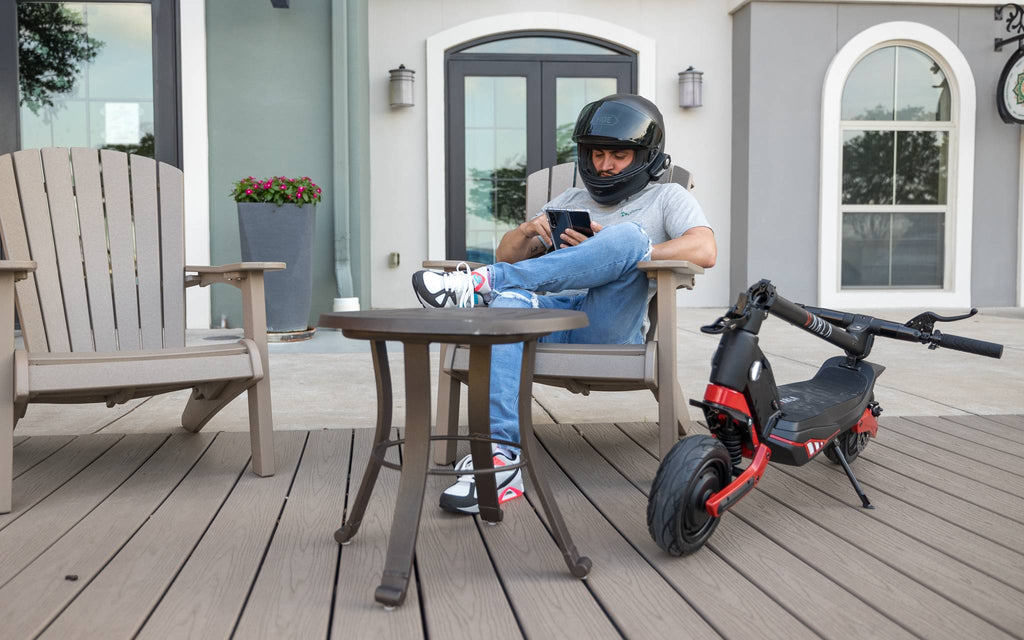
Are Electric Scooters Good For College Students
College life may be busy, and finding your way around campus can be difficult, especially if you are in a hurry. Fortunately, an easy solution to this issue is utilizing electric scooters. Some advantages of riding an electric scooter on campus include:
-
1. Time-Saving:
You can get around campus quickly and efficiently and avoid traffic if you have an electric scooter. Scooters are helpful if you have a busy schedule and must arrive at class on time. Students can whizz around campus on scooters, saving time and energy. Scooters are also simple to park and handle, allowing users to move from class to class without worrying about parking spots or traffic.
-
2. Cost-Effective:
Electric scooters are cheaper than cars, especially when you consider gas, parking, and maintenance. Since commuter scooters use electricity, which is frequently less expensive than gasoline, they require little maintenance and have low operating costs. You can save money on transportation expenditures by using electric scooters. If you’re a college student who utilizes buses to move around the campus, buying a commuter scooter can help you save money on daily price or monthly transportation passes. You can use your scooter to commute to class or other locations for no cost instead of paying for public transportation.
-
3. Eco-Friendly:
Electric scooters can be sustainable and eco-friendly for individuals on campus because they do not produce harmful gases; instead, they run on rechargeable batteries, making them a more environmentally friendly means of transportation. The cost of operating commuter scooters is frequently lower than that of conventional vehicles, which can assist in easing the financial load on students and staff who must travel within the campus. Due to the physical effort required to operate a scooter, they also encourage an active lifestyle, enhancing general fitness and well-being.
-
4. Convenient Transportation:
For students on campus, commuter scooters are a practical, effective, and convenient mode of transportation. Because of their low weight and small size, they can quickly move in busy spaces and avoid obstructions like parked bicycles or pedestrians. They are the best means of transportation for moving about on campuses or off-campus sites because they can cover long distances fast and effectively.
Tips For Choosing The Right Commuter Scooter For College
Electric Commuter scooters have grown in popularity recently due to their effectiveness, practicality, and environmental friendliness. The dual-motor electric scooter distinguishes from other types of electric scooters because it offers strong acceleration and is appropriate for managing rugged terrain. There are many things to consider before purchasing a commuter scooter to ensure you obtain the finest one for your requirements.

-
1. Legal Regulations:
It is essential to review your college’s policies regarding using electric scooters on campus. Some colleges might impose speed restrictions or helmet requirements. Therefore confirm the laydown rules that have been put in place for students using the electric scooters.
-
2. Battery Life and Charging Time:
Your commuter scooter should have a long battery life so you can ride it to lectures without recharging it. It would help if you didn’t have to wait around while your scooter charges, so consider that as well.
-
3. Consider The Weight and Portability:
You should pick an electric scooter that is light in weight because they come in various sizes. A lightweight scooter like the Eagle One Dual Motor Electric Scooter is better if you need to maneuver stairs or navigate tight spaces.
-
4. Portability and Storage:
Consider the ease of storage for your scooter, mainly if you have limited space in your dorm room. The Eagle One scooter is lightweight and small, making it portable and simple to carry anywhere.
-
5. Check the Maximum Speed and Weight Capacity:
Make sure the scooter you select can support your weight and has a top speed that complies with the rules at your college. Thankfully, the Pegasus city commuter electric scooter allows a top speed of up to 28 MPH and has a maximum weight capacity of 280 lbs, approximately 170kg.
Potential Risks And Safety Measures
You should be mindful of any risks and implement the necessary safety precautions before riding your electric scooter on campus.
-
1. Essential Safety Gear:
Purchase protective equipment, such as a helmet, knee and elbow pads. Gloves can improve your grip on the handlebars and protect your hands in the event of a fall. Consider donning sunglasses or other eye protection to protect your eyes from dust, wind, and debris. These safety gears can shield you from harm in an accident.
-
2. Proper Maintenance of the Electric Scooter:
To keep your electric scooter in good shape, regularly maintain it. Dirt, dust, and debris can accumulate on the electric scooter, affecting its performance. Wessing the scooter’s body and wheels periodically with a soft cloth is recommended. Ensure the brakes, tires, and lights are in good working order.
-
3. Avoiding Hazardous Terrains:
Steep hills, rough or uneven ground, and busy roads are all unsafe places to ride an electric scooter. These circumstances may raise your risk of an accident.
How Can I Prevent My Electric Scooter From Being Stolen?
When not in use, lock your electric scooter. Consider purchasing a reliable lock that is difficult to hack. Pick a well-lit location where other people are present to park your scooter. Keep your scooter out of isolated or dark spaces where thieves could easily reach it. Also, consider installing a GPS tracker on your scooter to locate when stolen.

Commuter Scooters Recommended For College Students
The Varla Pegasus and Eagle One are two options to consider if you’re looking for a dependable commuter scooter for college because of its durability, performance, and portability. Here are some convincing reasons to choose these scooters:
- 1. These electric scooters have sturdy frames, robust suspension systems, and high-quality components that handle rough terrain and heavy use.
- 2. They are both lightweight, designed to be portable, and easy to carry.
- 3. Varla equipped these scooters with folding mechanisms, making them compact and easy to store.
- 4. Both scooters have potent motors and long-lasting batteries, making them ideal for commuting and getting around campus.
- 5. They have impressive speed and range, allowing students to travel without worries.
Electric scooters are an excellent way for college students to get around. They are convenient, economical, environmentally friendly, and time-saving. However, it is crucial to exercise caution when using one, which includes donning protective gear, keeping the scooter in good working order, and steering clear of potentially dangerous terrain. If you need commuter scooters for college life, go for the Varla Pegasus and Eagle One.
Can I Store and Charge an Electric Scooter in My Dorm Room?
In most universities, no — but it depends entirely on your campus's specific housing policy.
Due to lithium-ion battery fire hazards, university policies on micromobility devices generally fall into three categories:
University Electric Scooter Storage and Charging Policies
| Campus Policy Type | What Is Allowed | Typical Requirements / Restrictions |
|---|---|---|
|
Complete Ban (Most Common) |
Outdoor storage only; no indoor entry |
Scooters, e-bikes, and hoverboards are banned from all residence halls. Violations often bring fines or confiscation. |
|
Conditional Permission |
Storing and charging allowed indoors |
Device must be UL 2272 certified; device must be registered with campus transit/parking; no charging unattended. |
|
Outdoor / Centralized Only |
Outside racks or dedicated mobility hubs |
Charging is prohibited in dorms, but the campus provides outdoor charging lockers or sheltered racks. |
What to Check Before Bringing a Scooter to Campus
1. Search Your Housing Contract: Look up your school's Residence Life Handbook or Fire Safety Regulations for terms like "micro-mobility," "lithium-ion," or "electric personal assistive mobility devices."
2. Look for Certification Labels: If your campus allows scooters conditionally, they almost universally mandate electrical safety certification (UL 2272 for personal e-mobility or UL 2849 for e-bikes). Uncertified budget models are strictly prohibited.
3. Inspect the Fine Print on Batteries: Some campuses ban the full vehicle indoors but allow removable battery packs to be brought inside for charging — though many have closed this loophole.
Safe Practices If Your Dorm Permits Charging
If your residence hall does allow charging in rooms, fire marshals and campus safety departments require strict protocols:
- Keep Exits Clear: Never charge or park the scooter near your doorway or hallway. If a battery enters thermal runaway, an obstructed door blocks your only exit.
- Wall Outlets Only: Plug the original manufacturer charger directly into the wall outlet. Never use extension cords, surge protectors, or daisy-chained strips.
- No Unattended or Overnight Charging: Charge only when you are awake and inside the room. Unplug it as soon as it reaches full capacity.
- Surface Selection: Keep the scooter and brick charger on bare flooring (tile, laminate, or concrete), well away from rugs, bedsheets, or laundry piles.
How Much Real-World Range Do I Actually Need for a College Campus?
For a typical college student, the sweet spot for real-world range is 10 to 15 miles per charge.
However, manufacturer-advertised specs are tested under idealized conditions (flat track, 150 lb rider, lowest eco speed). In the real world, you generally get 50% to 65% of the claimed range.
To hit that 10–15 miles of actual use, aim for a scooter with an advertised range of 20 to 30 miles (or a battery capacity around 350Wh to 500Wh).
1. Breakdown of Daily Campus Mileage
- Dorm-to-Class Commute: On a typical university campus, classes are usually within 0.5 to 1.5 miles of residence halls. Round-trips throughout the day (morning lecture, lunch, afternoon lab, library) usually total 3 to 6 miles.
- Off-Campus Errands: Runs to the grocery store, gym, dining off-campus, or social events typically add another 3 to 5 miles.
- Daily Total Needed: 6 to 10 miles.
2. Why You Need More Than Just Your Daily Mileage
You shouldn't buy a scooter that matches your daily mileage exactly. Several factors cause real-world range to drop quickly:
1. Top-Speed / Sport Mode: Riding in standard or sport mode (15–20 mph) to get to class on time reduces battery life by 30–40% compared to eco mode.
2. Cold Weather: Lithium-ion battery efficiency drops significantly in low temperatures. Late fall, winter, or early spring riding can reduce range by an additional 20–30%.
3. Campus Hills and Weight: Carrying a heavy backpack, navigating steep inclines, and frequent stop-and-go riding at pedestrian crosswalks drain power rapidly.
4. The Charging Reality: Outlets in dorms or bike racks aren't always accessible during the day. Having a buffer means you only need to plug in every 2 to 3 days, instead of stressing over battery levels between classes.
5. Voltage Sag: When a scooter battery drops below 20–30%, acceleration and top speed drop noticeably. A larger buffer ensures the scooter stays responsive all day.
3. Campus Living Scenarios
| Commute Profile | Typical Daily Need | Recommended Advertised Range | Ideal Battery Size | Example Scooter Class |
|---|---|---|---|---|
|
Compact Campus / Dorm Resident |
3–5 miles/day |
15–20 miles |
~250–350 Wh |
Ultra-portable (e.g., Segway Ninebot E2 / Air T15) |
|
Large Campus / Moderate Errands (Most Students) |
6–10 miles/day |
22–30 miles |
~360–500 Wh |
Balanced commuter (e.g., Segway Ninebot Max G30LP / NIU KQi2 Pro) |
|
Off-Campus Commuter / Hilly Campus |
10–15+ miles/day |
35–45 miles |
~550–700+ Wh |
Long-range commuter (e.g., Segway Ninebot Max G2 / NIU KQi3 Max) |
4. Campus-Specific Trade-off: Weight vs. Range
The single biggest compromise with range is weight:
- Batteries are the heaviest part of a scooter.
- Scooters with 15–20 miles of advertised range usually weigh 28–33 lbs (easy to carry up dorm stairs).
- Scooters with 25–30 miles of advertised range weigh 38–43 lbs (manageable for 1–2 flights of stairs, but noticeably heavy).
- Scooters with 40+ miles of range weigh 50+ lbs (impractical if your building doesn't have an elevator or if you need to bring it into classrooms).
Summary Recommendation
If your campus has stairs or you live in an upper-floor dorm without an elevator, target a model with 20–25 miles of claimed range (~35–40 lbs). It comfortably delivers 10–14 real-world miles without becoming a burden to carry indoors.
Can the Scooter Handle Steep Hills?
Yes, an electric scooter can handle steep hills, but only if it has the right motor specs.
Standard entry-level campus scooters (250W–350W single motors) often bog down or crawl to a stop on grades over 10–12%.
For campuses with steep inclines, look for:
- Motor Power: At least 700W–1000W peak single-motor power or a dual-motor setup (two motors delivering simultaneous torque to both wheels).
- System Voltage: 48V or higher to maintain consistent torque without drawing excessive current that triggers thermal throttling.
- Weight & Portability: Balanced power without making the scooter too heavy to carry up dorm stairs.
Here is the updated selection, placing the Varla Eagle One PRO at the very top of the list for high-power hill climbing.
1. Top Dual-Motor Hill Climbers (For Extreme Slopes & Campus Inclines)
Varla Eagle One PRO All Terrains Electric Scooter
The Eagle One PRO All Terrains Electric Scooter delivers 3600W peak dual power and 40 Nm torque to power up steep 35-degree slopes.
INMOTION Climber Electric Scooter
The INMOTION Climber Electric Scooter uses dual 750W motors to conquer campus hills up to a 36% grade with minimal speed loss.
Ausom L2 Max Dual Motor Electric Scooter
The Ausom L2 Max Dual Motor Electric Scooter features 2x1000W dual motors built to handle 46% inclines and longer commutes.
2. High-Torque Single-Motor Commuters (Lighter for Dorm Carry)
Segway ZT3 Pro Electric Scooter
The Segway ZT3 Pro Electric Scooter provides a 1600W peak motor and dual suspension for smooth, stable climbing over cracked campus walkways.
Segway Max G3 Plus Electric Scooter
The Segway Max G3 Plus Electric Scooter offers 2200W peak output, hydraulic shocks, and built-in Apple Find My tracking for anti-theft security.
NIU KQi 300X Electric Scooter
The NIU KQi 300X Electric Scooter combines a 1000W max power motor with hydraulic front suspension to clear standard 20% campus grades effortlessly.
Hiboy MAX Pro Electric Scooter
The Hiboy MAX Pro Electric Scooter up to 46.6 Miles for Adults handles steep hills with ease while offering large 11-inch tires for shock absorption.
Circooter Mate 1000W Motor
The Circooter Mate 1000W Motor uses a 1000W motor setup and rugged tires to maintain momentum on sustained inclines.
3. College Commute Trade-off to Note
While the Eagle One PRO All Terrains Electric Scooter offers massive hill-climbing torque and a 60V battery system, it weighs 90 lbs.
If you need to carry the scooter up multiple flights of dorm stairs daily, consider a single-motor commuter like the NIU KQi 300X Electric Scooter or INMOTION Climber Electric Scooter.
How Long Does the Battery Take to Fully Charge?
Most electric scooters used by college students take between 4 and 7 hours to charge fully from completely empty.
The exact duration depends on the battery pack capacity and the charger output.
Electric Scooter Battery Charging Time Comparison
| Scooter Type | Battery Capacity | Typical Range | Full Charge Time | Typical Use Case |
|---|---|---|---|---|
|
Ultra-Light / Short Commute |
~180–280 Wh (5–7.8 Ah) |
10–15 miles |
3 to 4.5 hours |
Quick trips between dorms and lecture halls; easy daytime top-ups |
|
Standard Campus Commuter |
~360–550 Wh (10–15 Ah) |
18–30 miles |
5 to 7 hours |
Full-day cross-campus riding; recharged overnight |
|
Long-Range Commuter |
600+ Wh (16+ Ah) |
30+ miles |
7 to 9+ hours |
Multi-day riding between charges; heavier battery pack |
Key Factors Behind Charging Speed
1. Capacity & Charger Output Formula
A rough estimate is:
Charging Time (hours) = Battery Capacity (Ah) ÷ Charger Output Current (A) × 1.2
(Accounting for efficiency loss and the trickle-charge phase.)
Example:
A standard 36V 10.4Ah battery paired with a typical stock 2A charger takes around:
10.4 ÷ 2 × 1.2 ≈ 6.2 hours
to reach 100%.
2. The CC-CV Charging Profile
Lithium-ion batteries use Constant Current - Constant Voltage (CC-CV) charging.
The first 80% charges relatively quickly (often within 2 to 3 hours), while the remaining 20% drops to a slow trickle charge to balance individual cell voltages and protect cell health.
3. Ambient Temperature
Cold weather slows lithium ion migration, causing the battery management system (BMS) to throttle intake current to prevent lithium plating.
Charging right after an aggressive ride also delays fast charging until internal pack temperatures normalize.
Practical Campus Charging Practices
- Top up at 20% to 30% rather than draining to zero: Lithium batteries have no memory effect. Charging from 20% to 80% takes a fraction of the time and drastically reduces cycle degradation.
- Let the pack rest before plugging in: Allow the scooter to sit at room temperature for 15–20 minutes after riding before connecting the charger, allowing thermal equilibrium.
- Stick to the OEM charger rating: High-amperage third-party chargers generate excess heat and can overwhelm standard commuter BMS boards unless explicitly rated for fast charging.
How Do I Prevent My Electric Scooter from Being Stolen on Campus?
To keep an electric scooter secure on a college campus, defense in depth is essential—deterring opportunistic thieves while making targeted theft too slow and noisy to attempt.
1. Upgrade Your Locking Hardware
- Ditch cable locks: Thin wire and cable locks can be snipped in seconds with standard hand wirecutters.
- Use an angle-grinder-resistant U-lock or heavy chain: A hardened steel U-lock (like a Kryptonite New York series or an angle-grinder-resistant lock such as the Litelok X1 or Hiplok D1000) requires serious power tools to defeat. Look for a Sold Secure Bicycle Diamond rating .
- Layer with a secondary lock: Pair your primary U-lock with a secondary lock—such as a disc-brake lock with a built-in 110 dB motion alarm or a heavy folding lock. Requiring two distinct tools (e.g., a grinder and a lock pick) causes most thieves to move on to an easier target.
2. Lock to the Structural Frame, Not Removable Parts
Because scooters lack the closed triangle frames of bicycles, thieves often slip locks over handlebars or unscrew wheels:
- Loop through the main stem/deck junction: Pass your U-lock through the structural frame where the stem meets the deck, or through a dedicated welded locking loop if your model has one.
- Avoid handlebars and quick-release stems: Never lock around just the upper stem or handlebars, as removing a few Allen bolts allows the entire scooter to be slipped free.
- Anchor to a cemented rack: Always attach the lock to a secure bike rack or permanent post anchored into concrete, rather than signposts with loose bolts or low fences where the scooter could be lifted over.
3. Choose Parking Locations Strategically
- Target high-traffic, well-lit zones: Park in busy campus corridors, outside primary dining halls, or directly beneath visible security cameras.
- Bring it indoors when permitted: If campus policy and dorm rules allow, fold the scooter and take it into your dorm room or lecture hall.
- Never leave it outside overnight: The majority of campus bike and scooter thefts happen between midnight and 6 AM when racks are unmonitored.
4. Enable Tracking & Campus Registration
- Conceal a GPS / Bluetooth tracker: Hide an Apple AirTag, Samsung SmartTag, or Tile tracker inside the battery compartment, under the deck lid, or inside the stem tube. Keep the tracker's anti-stalking safety features enabled.
- Register with Campus Safety / Police: Many university police departments (such as University Public Safety divisions ) offer free micromobility registration. They record your serial number, take photos, and provide tamper-resistant registration stickers that deter resale and enable return if recovered.
- Keep your records: Photograph your scooter's serial number (stamped on the underside of the deck) and keep your proof-of-purchase receipt stored in cloud storage.
Is Buying an Electric Scooter Cheaper Than Getting a University Parking Permit?
In most cases, yes—buying an electric scooter is significantly cheaper than paying for a university parking permit, especially when evaluated over a full academic year or multiple years.
Cost Breakdown: Parking Permit vs. E-Scooter
| Expense Category | Car Commute + Campus Permit | Commuter Electric Scooter |
|---|---|---|
|
Upfront / Capital Cost |
Existing vehicle |
$350–$650 (reliable commuter model, e.g., Segway, NIU, Gotrax) |
|
Permit / Recurring Access Fee |
$300–$900+ / academic year (often $150–$450/semester; $1,000+ at dense urban campuses) |
$0 (some campuses require a free or $5–$15 bike/micromobility registration) |
|
Accessories & Security |
$0 |
$60–$100 (certified helmet + angle-grinder-resistant or heavy-duty U-lock) |
|
Fuel / Energy Costs |
$200–$500 / year (short-trip gas consumption) |
$5–$15 / year (charging consumes ~0.3–0.5 kWh per full charge) |
|
Maintenance & Wear |
Oil changes, tires, vehicle depreciation |
$20–$50 / year (inner tubes/sealant, brake adjustments) |
|
Estimated Year 1 Total |
$500–$1,400+ |
$435–$815 |
|
Estimated Year 2+ Total |
$500–$1,400+ each year |
$25–$65 / year |
The Financial Takeaways
- Breakeven Timeline: If your campus parking permit runs $350+ per year, an entry-to-midrange commuter scooter effectively pays for itself in the first 6 to 12 months.
- Long-Term Savings (2–4 Years): Because a scooter is a one-off asset rather than a recurring semester subscription, keeping an e-scooter across a 3–4 year college timeline can save you $1,000 to $3,000+ compared to recurring permit purchases, vehicle wear, and local fuel costs.
- Hidden Convenience Value: A parking permit does not guarantee a spot near your lecture halls. You still face lot-hunting delays and a 10–15 minute walk across campus from perimeter lots. A scooter provides point-to-point transit right up to the building bike rack.
4 Critical Factors to Verify Before Buying
1. Campus Micromobility & Battery Policies
Many universities have instituted strict micromobility rules. Some prohibit e-scooters inside residence halls or academic buildings unless the device is UL 2272 certified.
Check your campus parking and transportation policy to ensure indoor storage and charging are permitted.
2. Theft Risk & Locking Infrastructure
Scooter theft on college campuses is common.
Factor a high-security lock (such as a Sold Secure Silver or Gold rated U-lock or folding lock) into your initial budget, and avoid cheap cable locks.
3. Commute Distance & Topography
Most budget scooters deliver 12–18 miles of real-world range per charge and struggle on steep hills (grades over 10–15%).
If you live more than 4–5 miles off-campus or face major inclines, you would need a dual-motor or larger-battery commuter model ($700–$900).
4. Weather & Winter Commutes
If your university experiences harsh winters (snow, ice, sub-freezing temperatures), scooters become unsafe for several months, and lithium batteries lose 20–40% of their operational capacity in freezing temperatures.
You will need a backup plan (such as campus transit or city bus routes) during winter months.
What Safety Features Are Essential for Riding an Electric Scooter Around a Crowded Campus?
Navigating an electric scooter across a crowded campus requires features that maximize low-speed maneuverability, immediate stopping power, and clear communication with pedestrians who may be distracted or wearing headphones.
1. Dual Braking System
A single electronic or rear fender brake is insufficient when a pedestrian steps into your path without looking. Look for:
- Mechanical front and rear braking: Dual disc brakes or a combination of a front drum brake and rear disc/electronic brake provide short stopping distances without locking up the rear wheel.
- Regenerative / E-ABS: Helps prevent wheel lock-up on damp leaves, painted crosswalk lines, or slick pavement during sudden stops.
2. Low-Speed "Eco" or Pedestrian Modes
Campus paths and pedestrian zones often enforce 10–15 mph speed caps (or lower around class changes).
- Speed limit profiles: A dedicated "Walk" or "Eco" mode caps top speed (typically 3–9 mph) and softens throttle response.
- Smooth throttle modulation: Jerky acceleration makes tight navigation around pedestrians unstable. A scooter with progressive thumb or trigger throttle control prevents accidental surges.
3. Integrated Warning Bells or Horns
Electric scooters operate almost silently, making early acoustic warnings critical.
- Handlebar-mounted bell or electric chime: A physical thumb bell sounds friendly and non-aggressive to pedestrians on shared sidewalks.
- Loud horn: Essential for alerting campus shuttle buses, delivery vans, and vehicles at blind intersections.
4. High-Visibility Lighting & Turn Signals
Campus commuting often happens at dusk, at night, or through poorly lit quads.
- High-mounted headlight: Low deck-mounted headlights illuminate ground obstacles but fail to catch the eye of oncoming walkers or drivers. A headlight mounted at or near the handlebar stem is significantly safer.
- Flashing rear brake lights: Warns riders and cyclists behind you whenever you feather the brakes.
- Integrated turn indicators: Signaling with your hands on small scooter handlebars can throw off balance; handlebar-end or deck-integrated blinkers allow you to signal while keeping both hands firmly on the controls.
5. Pneumatic Tires (8.5+ Inches) & Basic Suspension
Crowded campuses are littered with brick pavers, expansion joints, drainage grates, and curb drops.
- Air-filled (pneumatic) or self-sealing tubeless tires: Provide far superior traction and vibration dampening compared to solid rubber tires, which tend to slip on wet utility covers or brick walkways.
- Front/rear spring or elastomer suspension: Keeps the front wheel grounded and stable when dodging sudden obstacles at low speeds.
6. Battery Safety Certifications (UL 2272)
Most universities enforce strict dorm and building policies prohibiting uncertified lithium-ion mobility devices due to fire risks.
- Ensure the entire electrical system is UL 2272 certified (or that the battery pack complies with UL 2271) to avoid confiscation or campus building bans.
Can the Electric Scooter Be Ridden in the Rain or Snow on Campus?
Riding an electric scooter in rain or snow on campus comes down to three critical factors: campus policy, mechanical safety/traction, and water-resistance limits.
While light drizzle might be manageable on a water-rated scooter, riding in significant rain or snow is generally strongly discouraged and often banned.
1. Campus Rules & Liability
- Weather & Surface Restrictions: Many universities instruct riders to dismount or prohibit scooter use during inclement weather (heavy rain, ice, snow) due to pedestrian safety hazards.
- Campus Bans & Geofencing: Shared rental fleets (such as Lime, Bird, or Spin) frequently shut down or get remotely deactivated by the operator or campus administration during snowstorms and heavy rainfall.
- Indoor Storage & Charging: Even if you make it across campus, nearly all universities prohibit bringing wet scooters or battery packs into dorms and academic buildings due to fire and slip hazards.
2. Physical Hazards: Traction & Braking
Electric scooters have tiny wheels (usually 8 to 10 inches), a high center of gravity, and immediate motor torque, making them dangerous on slick surfaces:
- Traction Loss: Painted crosswalks, metal drainage grates, brick plazas, and wet leaves become extremely slippery in the rain.
- Snow & Hidden Black Ice: Fresh powder easily packs into the wheel wells and jams fenders, while thin layers of black ice or slush make turning and balancing virtually impossible.
- Extended Stopping Distances: Wet disc, drum, or electronic brakes can lose effectiveness. On slick pavement, sudden braking can lock the front wheel and throw the rider over the handlebars.
3. Water Resistance vs. Waterproofing
Most scooters are water-resistant, not waterproof.
| Ingress Rating | Real-World Weather Capability | Risk Level |
|---|---|---|
|
Below IPX4 |
Dry conditions only. |
High risk of electrical failure. |
|
IPX4 / IPX5 |
Handles light mist or brief splashes. |
High risk if puddles submerge the deck. |
|
IPX6+ |
High-pressure splashes / sustained rain. |
Lower risk of electrical short, but mechanical wear remains high. |
- Puddle Depth: The lithium-ion battery pack and controller sit inside the bottom deck. Rolling through a puddle deeper than a couple of inches can submerge wire seals, shorting the battery or causing corrosion that voids the warranty.
- Moisture in Controls: Throttle assemblies, thumb controls, and LCD displays are vulnerable to water seeping behind the glass, which can trigger phantom acceleration or screen cutouts.
4. Safe Riding Practices (If Caught in Bad Weather)
1. Slow down significantly: Cap your speed well below the campus limit (under 10 mph / 16 km/h).
2. Coast through turns: Never lean hard or brake while turning; brake smoothly in a straight line using primarily the rear brake.
3. Avoid road hazards: Steer clear of metal manhole covers, tactile paving, wet utility plates, and large puddles where potholes might hide.
4. Dry before charging: Never plug a damp scooter into a charger immediately. Wipe it down completely and let the deck and charging port air-dry at room temperature for several hours to prevent a short circuit.


